
Economic Research with AI Agents
- Staff Desk
- Jul 8
- 3 min read

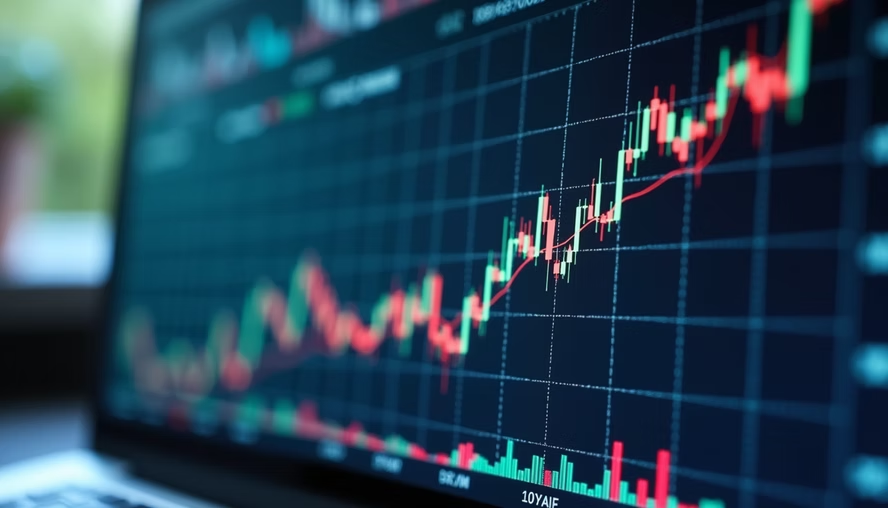
Economic research has always relied on data analysis, modeling, and forecasting to understand market trends, policy impacts, and financial behavior. Yet, the sheer volume of data and the complexity of economic systems often slow down traditional methods. AI agents are now transforming this landscape by automating tasks, uncovering hidden patterns, and enabling faster, more accurate insights.
What Are AI Agents in Economic Research?
AI agents are software programs designed to perform specific tasks autonomously or with minimal human intervention. In economic research, these agents can:
Collect and clean large datasets from diverse sources
Run simulations and predictive models
Identify trends and anomalies in economic indicators
Generate reports and visualizations for decision-making
Unlike traditional algorithms, AI agents learn from data and improve over time, adapting to new information and changing conditions. This ability makes them valuable tools for handling complex economic problems that involve uncertainty and dynamic environments.
Examples of economic research tasks AI agents can perform
Collect macroeconomic indicators (GDP, inflation, unemployment, PMI)
Analyze central bank policy announcements
Summarize reports from international organizations
Compare economic indicators across countries
Forecast economic trends using historical data
Track commodity prices, currencies, and bond yields
Analyze fiscal and monetary policy impacts
Generate research reports with charts and citations
Monitor breaking economic news and assess market implications
Applications Across Economic Fields
AI agents are increasingly used in:
Macroeconomics: GDP growth, inflation, interest rates, employment, and monetary policy analysis.
International Economics: Trade flows, tariffs, exchange rates, and geopolitical impacts.
Development Economics: Poverty reduction, education, healthcare, and infrastructure evaluation.
Financial Economics: Equity markets, bonds, commodities, and derivatives research.
Labor Economics: Wage trends, workforce participation, and productivity analysis.
Public Finance: Tax policy, government spending, fiscal deficits, and debt sustainability.
How AI Agents Improve Data Handling
Economic research depends heavily on data quality and availability. AI agents help by automating data collection from sources like government databases, financial markets, social media, and news outlets. They can also preprocess data by removing errors, filling gaps, and standardizing formats.
For example, an AI agent might scan thousands of news articles daily to extract relevant economic events, such as policy changes or market disruptions. This real-time data feeds into models that forecast economic outcomes more accurately than relying on static datasets.
Economic Modeling and Forecasting
Traditional economic models often require manual calibration and assumptions that limit their flexibility. AI agents use machine learning techniques to build models that adapt to new data without constant human tweaking.
One practical example is using reinforcement learning agents to simulate market behavior. These agents interact with virtual economic environments, learning strategies that mimic real-world decision-making by consumers, firms, or governments. The resulting models can predict responses to policy changes or shocks more realistically.
Another case involves natural language processing (NLP) agents analyzing central bank statements or economic reports to gauge sentiment and anticipate policy moves. This approach adds a qualitative dimension to quantitative models, improving forecasts.

Practical Applications in Policy and Business
AI agents are already influencing economic research in several areas:
Monetary policy analysis: Central banks use AI agents to monitor inflation trends and labor market data, helping set interest rates with better precision.
Financial risk assessment: Banks deploy AI agents to evaluate credit risk by analyzing borrower data and market conditions, reducing defaults.
Market trend prediction: Investment firms use AI agents to detect emerging sectors or asset bubbles by scanning global economic indicators and news.
Supply chain optimization: Companies apply AI agents to forecast demand and adjust production, minimizing costs and avoiding shortages.
These examples show how AI agents provide actionable insights that support faster and more informed decisions.
Challenges and Ethical Considerations
Despite their benefits, AI agents in economic research face challenges:
Data bias: AI agents learn from available data, which may reflect historical biases or incomplete information, leading to skewed results.
Transparency: Complex AI models can be difficult to interpret, making it hard to explain decisions or predictions to stakeholders.
Privacy: Collecting and analyzing economic data must respect privacy laws and ethical standards, especially when involving personal or sensitive information.
Dependence: Overreliance on AI agents might reduce critical thinking or human oversight in economic analysis.
Researchers and institutions must address these issues by developing transparent, fair, and accountable AI systems.

Looking Ahead: The Future of AI in Economic Research
AI agents will continue to evolve, integrating more advanced techniques like causal inference and multi-agent systems. These developments will enable economists to explore complex interactions within economies and test policy scenarios with greater confidence.
Collaboration between economists, data scientists, and AI developers will be crucial to harness the full potential of AI agents. Training researchers to understand AI tools and their limitations will also improve the quality and impact of economic studies.
The future promises faster, more precise economic insights that can guide better policies and business strategies, ultimately benefiting society as a whole.




Comments