
How Robotics Is Transforming Daily Life


A robot no longer has to look like a metal person to change a household. It might be a round vacuum that cleans under the couch, a mower that trims the yard before anyone wakes up, a delivery cart rolling down a sidewalk, or a surgical system that helps a doctor make smaller, steadier movements.
Robotics has moved out of science fiction and into ordinary routines. The shift is easy to miss because many of the most useful robots are not dramatic. They do small, repetitive, tiring, or risky jobs. They save a few minutes here, reduce a bit of strain there, and quietly make life more manageable.
That is the real story of daily-life robotics. The biggest changes are not always loud. They show up in cleaner floors, safer warehouses, more independent aging, faster hospital workflows, better mobility support, and a little less friction in the day.

Robots are becoming part of the home
The home is where many people first meet robotics. Not through a humanoid helper, but through a machine that handles one job well.
Robot vacuums are the best-known example. They map rooms, avoid many obstacles, return to their docks, and in some models empty their own dustbins. They do not replace deep cleaning, but they reduce the buildup of dust, crumbs, pet hair, and grit. That matters in busy homes, especially where kids, pets, or mobility limits make daily floor care harder.
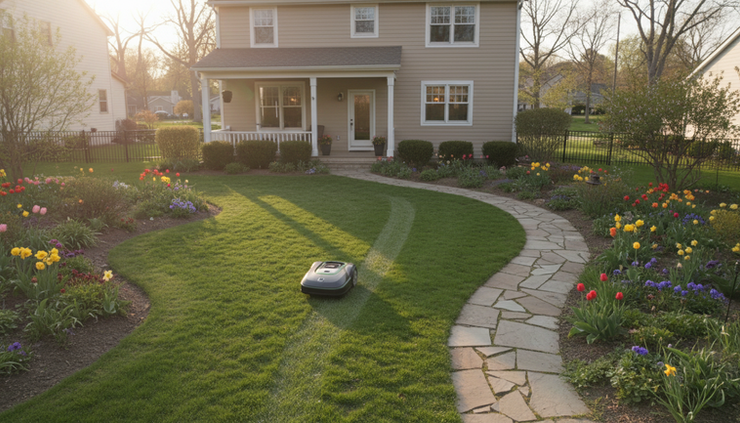
Robot mowers do something similar outdoors. They cut grass in regular sessions instead of waiting for one long weekend chore. Some use boundary wires, while newer models may use cameras, GPS, or other sensors. The practical gain is simple: lawns can stay neat with less time behind a noisy machine.
Pool-cleaning robots, window-cleaning robots, and gutter-cleaning tools all follow the same pattern. They take a chore that is repetitive, awkward, or physically tiring and turn it into a managed task.
The best home robots share a few traits:
They solve a real, narrow problem
A robot that cleans floors every day is more useful than a general-purpose robot that almost helps with many things.
They work without constant attention
If a person has to rescue the robot every few minutes, the machine becomes another chore.
They fit into routines
The strongest home robots charge on their own, run on a schedule, and recover gracefully when they get stuck.
They respect the space
Homes are messy and personal. A useful robot has to handle socks, rugs, pet bowls, cords, furniture legs, and uneven lighting.
This is one reason home robotics has grown gradually. A house is far less predictable than a factory. A factory can be organized around machines. A home changes by the hour. Someone drops a backpack by the door. A dog moves a toy into the hallway. A chair gets pulled out from the table.
That makes robotics harder, but also more valuable. A robot that can manage normal household disorder is doing more than moving. It is sensing, deciding, and adjusting.
Smart speakers, thermostats, and security cameras are not robots by themselves, but they are part of the same home automation shift. The line between smart device and robot often comes down to physical action. A thermostat adjusts temperature. A robot moves through space or manipulates the physical world.
As home robots improve, they will likely become more specialized before they become more general. A laundry-folding robot, dish-clearing robot, or kitchen prep assistant has to handle soft, slippery, breakable, and irregular objects. That is hard. By comparison, vacuuming a flat floor is much easier.
The near future of home robotics will probably look less like one all-purpose helper and more like a set of quiet machines built for specific jobs.
Care and accessibility are where robots matter most
The most meaningful use of robotics may not be convenience. It may be independence.
For older adults and people with disabilities, small daily tasks can shape the difference between living independently and needing full-time help. Robotics can support that independence in several ways.
Mobility robots already help people move through homes, hospitals, airports, and public spaces. Powered wheelchairs, robotic walkers, and smart mobility aids can reduce strain and improve control. Some systems use sensors to help avoid obstacles or support steadier movement.
Robotic exoskeletons are another important area. These wearable systems can help support standing, walking, lifting, or rehabilitation exercises. Some are used in medical and therapy settings. Others help workers reduce physical strain in demanding jobs. They are not magic suits, and they do not work for every person or every condition, but they show how robotics can support the body rather than replace it.
In health care, robots often work behind the scenes. Hospitals and pharmacies use automation for moving supplies, sorting medications, cleaning rooms, and supporting lab work. These jobs require accuracy and repeatability. When machines handle some of that load, staff can spend more time on human care.
Surgical robotics is one of the better-known medical uses. In many procedures, robotic systems help surgeons control tiny instruments with steady, precise movements. The surgeon remains in charge. The robot extends the surgeon’s ability to work through small openings and fine motions.
At home, care robots are still developing. The challenge is not only technical. It is emotional, practical, and ethical. A robot that reminds someone to take medication, carries an item across a room, or detects a fall needs to be reliable. It also needs to protect privacy and avoid making people feel watched or managed.
That balance is delicate.
A good care robot should support independence without taking away choice. It should help when needed and stay out of the way when not needed. It should make life safer without turning the home into a clinic.
Companion robots raise even more questions. Some people respond warmly to robotic pets or social robots, especially in care settings. These devices can offer comfort, routine, and interaction. Still, they should not be treated as substitutes for human connection. They work best as additions to care, not replacements for family, friends, nurses, aides, or community.

There is also a growing need for simple design. A care robot cannot require a long manual, constant app updates, or complicated troubleshooting. The people who benefit most may be the least able to deal with fragile technology. Clear buttons, plain alerts, easy cleaning, and dependable support matter as much as advanced sensors.
Robotics in care will succeed when it feels practical, respectful, and trustworthy. The goal is not to make people live around machines. The goal is to let people keep more control over daily life.
Robots are changing how food, shopping, and deliveries work
Robotics already shapes everyday errands, even when customers never see the machines.
In grocery stores, robots can scan shelves for missing products, track spills, or help with inventory. In warehouses, mobile robots move goods across large spaces so workers do not spend entire shifts walking long distances. In restaurants, machines can help with frying, drink preparation, dish transport, or food delivery in limited settings.
The reason is clear. Food and retail involve many repeated steps:
Moving items from one place to another
Checking stock
Cleaning floors
Sorting packages
Carrying orders
Repeating the same cooking motion
Delivering goods over short distances
Robots can perform some of these tasks consistently, especially in controlled spaces. That can improve speed and reduce physical strain. It can also help businesses stay open when staffing is tight.
Delivery robots are a more visible sign of this shift. In some neighborhoods, small sidewalk robots carry meals, groceries, or parcels. They move at low speeds, use cameras and sensors, and often operate within mapped zones. They still face challenges, such as snow, blocked sidewalks, stairs, theft, local rules, and accessibility concerns for pedestrians.
Drones are another delivery tool, though they are not yet an everyday service for most households. They can be useful in specific cases, such as moving medical supplies, reaching remote areas, or making short deliveries where local rules allow. In dense neighborhoods, noise, safety, privacy, weather, and landing space all become harder problems.
The biggest changes may happen inside supply chains. People may not notice a robot that helps pick items at a fulfillment center, but they notice when an online order arrives faster or a store has more accurate stock.
That does not mean every retail robot is useful. Some public-facing robots have been more novelty than necessity. A robot roaming a store must do more than look interesting. It has to solve a real problem, such as helping staff find empty shelves or cleaning aisles during off-hours.
Food robotics has a similar test. A machine that flips burgers, fries food, or prepares drinks must deliver consistent results and fit the reality of a kitchen. Kitchens are hot, wet, crowded, and unpredictable. Ingredients vary. Customers make changes. Staff need equipment they can clean, repair, and trust.
When robots work well in food and retail, they tend to do bounded tasks in defined spaces. The robot does not “run the restaurant.” It handles a process that has clear rules.
The effect on workers is complicated. Robotics can remove some dull or physically hard work. It can also change job roles or reduce demand for certain tasks. A healthy rollout should include training, clear expectations, and attention to safety. The best use of robotics helps people do better work rather than simply adding pressure to move faster.
For daily life, the result may feel quiet. A cart arrives sooner. A store shelf stays stocked. A meal gets delivered across campus. A pharmacy order is sorted with fewer manual steps. In each case, robotics works best when it disappears into the experience.
Transportation and public spaces are learning from robotics
Self-driving cars get the headlines, but daily transportation robotics is broader than fully autonomous vehicles.
Modern cars already include robotic features. Adaptive cruise control, lane support, automatic emergency braking, parking assistance, and driver monitoring all use sensors and software to help control motion. These systems vary by vehicle, and drivers still need to pay attention, but they show how robotics enters daily life in layers.
A car does not need to drive itself completely to benefit from robotic control. It can help maintain distance, apply brakes faster than a person might react, or assist with a tricky parking space. These features are not perfect, and overtrust is dangerous. Still, when used correctly, they can reduce some driving stress.
Public transit systems also use automation. Airport trains, people movers, and some rail systems operate with high levels of automated control. These systems work well because they run on fixed routes. The environment is much more predictable than city streets.
Robots also help maintain public spaces. Floor-cleaning robots are becoming common in large stores, airports, hospitals, and schools. Inspection robots can enter pipes, tunnels, power facilities, or disaster zones where conditions may be dangerous for people. Underwater robots inspect bridges, ship hulls, and water infrastructure. Drones can check roofs, utility lines, and farmland without putting a person on a ladder or sending a crew across rough ground.

Agriculture offers another daily-life link, even if it happens far from the kitchen table. Farm robots and autonomous equipment can help with planting, monitoring crops, removing weeds, milking cows, and sorting produce. When these systems work well, they support food production and reduce some difficult manual tasks. That can affect what reaches grocery stores, how farms manage labor, and how precisely resources are used.
Public-space robotics has to meet a higher standard than robots in private homes. A vacuum that gets stuck under a couch is annoying. A delivery robot blocking a wheelchair ramp is a real barrier. A drone flying over homes raises privacy concerns. A self-driving feature that confuses road markings creates safety risks.
This is why rules, testing, and clear design matter. Public robots must account for people who move in different ways, including wheelchair users, parents with strollers, kids, older adults, cyclists, and people with low vision. They must signal intent clearly. They must fail safely. They must respect shared space.
The future of robotics in public life will not be only a technical question. It will also be a civic one. Communities will need to decide where robots belong, what data they can collect, how they share sidewalks and roads, and who is responsible when something goes wrong.
The most successful public robots will be the least confusing. People should be able to understand where a robot is going, whether it has detected them, and what it will do next. Predictability builds trust.
The real transformation is happening in small steps
The phrase “robotics” can invite big expectations. People imagine humanoid assistants, fully self-driving cars, or machines that can understand any request. Some of that may come later, but the present is more practical.
The real transformation is happening through small handoffs.
A person still plans the meal, but a machine can stir, fry, or time part of the cooking. A nurse still cares for the patient, but a robot can deliver supplies across the hospital. A homeowner still decides what needs cleaning, but a robot can keep the floors clear between deeper cleanings. A driver still watches the road, but the car can help with braking or lane position.
These partial abilities are easy to underestimate. Yet they add up.
Robots are well suited for tasks that are:
Repetitive
Physically demanding
Dangerous
Time-consuming
Highly precise
Dirty or unpleasant
Based on clear movement patterns
They still struggle with tasks that require broad common sense, delicate judgment, emotional understanding, or handling many unknown objects in messy spaces. Folding laundry, cleaning a child’s room, caring for a scared patient, or managing a busy kitchen rush takes more than sensors and motors.
That gap explains why some robotics demos look amazing but products take years to become useful. A demo can work in a prepared setting. Daily life is not prepared. It is full of edge cases.
A good way to judge a robot is to ask five simple questions.
Does it solve a problem often enough to matter?
A robot that handles a rare task may not be worth the cost or storage space.
Does it save effort after setup?
If setup is harder than the task, the value fades.
Can people trust it around pets, kids, and guests?
Home robots do not operate in empty labs. They share space with living beings.
What happens when it fails?
A useful robot stops safely, explains the problem, or makes recovery simple.
Who controls the data?
Many robots use cameras, microphones, maps, or location information. Privacy cannot be an afterthought.
The data question deserves special attention. A robot vacuum that maps a home, a care robot that tracks movement, or a delivery robot that records sidewalks may collect sensitive information. Companies should make privacy settings clear and give people real control. Users should check what data a device collects, whether it stores video or audio, and how updates are handled.
Security matters too. A connected robot is also a connected computer with wheels, arms, sensors, or access to personal space. Strong passwords, update support, and careful app permissions are basic requirements.
Cost is another limit. Some robots are widely affordable, while others remain expensive or limited to hospitals, labs, farms, and larger organizations. Over time, prices often fall as parts improve and production grows. Still, the most useful robot is not always the most advanced one. It is the one that fits a real need at a reasonable cost.
The future will feel more normal than futuristic
The next stage of robotics will likely feel less like a sudden leap and more like steady absorption into daily tools.
Appliances will gain more movement and awareness. Cars will add more driver assistance. Hospitals will use more automated transport and cleaning. Farms and warehouses will rely on more mobile machines. Homes will get better robots for floors, yards, pools, and eventually more complex chores.
Artificial intelligence will play a role, especially in helping robots understand images, language, and changing environments. But a robot needs more than smart software. It needs safe hardware, reliable power, quiet operation, useful attachments, easy maintenance, and a design that works in the real world.
Battery life will shape what robots can do. So will sensors, motors, materials, and repair networks. A brilliant robot that breaks often or costs too much to fix will not become a daily companion.
The social side matters just as much. People need to feel comfortable sharing space with machines. That comfort grows when robots are predictable, modest, and helpful. It fades when robots are intrusive, confusing, noisy, or pushed into places where they do not belong.
The best future for robotics is not one where machines take over every task. It is one where people gain more choice over how they spend their energy.
For a parent, that might mean fewer crumbs and less yard work. For an older adult, it might mean staying at home longer with support. For a nurse, it might mean fewer supply runs. For a farmer, it might mean more precise crop care. For a person with limited mobility, it might mean reaching, moving, or cooking with less help.
Robotics is transforming daily life because it meets people in the physical world. It does not only send information across a screen. It moves, lifts, cleans, carries, steadies, and senses.
That physical presence is what makes robotics powerful, and also what makes it demanding. A bad app can frustrate someone. A bad robot can bump into things, block a path, collect private data, or create safety issues. The stakes are higher when software moves through the world.
The path forward should be practical and human-centered. Build robots for real needs. Test them in real homes and public spaces. Make them easy to stop, clean, repair, and understand. Protect privacy. Design for people with different bodies, ages, abilities, and routines.
When robotics works, daily life does not feel like a sci-fi movie. It feels like a bit less strain, a safer task, a cleaner room, a steadier hand, or a delivery that arrives without drama.
That is the transformation worth watching. The robots that matter most may not be the ones that look most human. They may be the ones that make human life a little easier, one ordinary task at a time.


Comments