
Robotics in Nursing Transforming Patient Care and Clinical Support
- Staff Desk
- 1 hour ago
- 11 min read

A nurse’s shift can turn on a hundred small tasks: finding the right pump, moving supplies, answering a bed alarm, checking a vital sign, documenting care, helping a patient sit up, calling pharmacy, and doing it all again before lunch. Many of those tasks matter. Some require judgment, touch, and clinical skill. Others are repetitive, physically demanding, or easy to delay when the unit gets busy.
That is where robotics in nursing is starting to make a real difference. Not as a substitute for nurses, and not as a hospital science project, but as a practical set of tools that can reduce strain, improve response times, and give nurses more room to focus on care that needs a human.
Robots in clinical settings now come in several forms. Some move supplies. Some help with lifting. Some disinfect rooms. Some support telehealth. Others assist with medication delivery, patient monitoring, or rehabilitation. The value is not in the robot itself. The value is in what it takes off the nurse’s plate, what it makes safer, and what it helps the care team see sooner.
This article is for general information only and is not medical, legal, or operational advice. Any use of robotics in patient care should follow clinical policy, safety standards, vendor guidance, and professional nursing judgment.

Nursing robots are tools for specific jobs, not replacements for nurses
The first mistake is to talk about “nursing robots” as if they are one thing. A robot that carries lab samples has almost nothing in common with a robotic gait trainer used in rehabilitation. A telepresence cart is different from an autonomous floor-cleaning or ultraviolet disinfection unit. Each has a narrow job.
That narrowness is a strength. Nursing work is broad and deeply human. Robots perform best when the task is repeatable, rules-based, measurable, and physically possible for a machine to do safely.
Common categories include:
Type of robot | What it supports | Practical nursing value |
Delivery robots | Transporting medications, supplies, linens, lab samples, or meals | Reduces time spent walking to service areas |
Telepresence robots | Remote clinician rounding, specialist consults, family communication | Helps connect patients with clinicians when timing or distance is a barrier |
Disinfection robots | Room or surface disinfection after manual cleaning | Adds another layer to infection prevention workflows |
Lifting and transfer robots | Repositioning, transferring, or mobilizing patients | Reduces physical strain and may lower injury risk |
Rehabilitation robots | Guided movement, gait practice, repetitive therapy exercises | Supports consistent practice under clinical supervision |
Monitoring robots and smart devices | Vitals checks, fall-risk alerts, environmental checks | Helps teams notice changes sooner when used correctly |
Socially assistive robots | Orientation, reminders, simple interaction, companionship | May support patients who feel isolated, confused, or anxious |
The key phrase is under clinical supervision. A robot may prompt, carry, lift, scan, or connect. It should not decide whether a patient’s symptoms are urgent, comfort a grieving family, interpret a subtle change in condition, or replace the nurse’s assessment.
Robotics works best when the care team assigns robots to the right problems. A hospital should not buy a robot because it looks advanced. It should start with a clear pain point:
Nurses spend too much time retrieving supplies.
Staff injuries from lifting and repositioning remain high.
Rooms need faster turnover without weakening infection-control standards.
Rural patients need access to remote specialists.
Rehabilitation patients need more guided repetition.
When the goal is clear, the robot becomes a tool. When the goal is vague, the robot becomes clutter.
Robots can improve patient care by making support more timely and consistent
Good nursing care often depends on timing. A patient needs help before trying to stand. A medication needs to arrive before a scheduled dose. A room needs to be cleaned before the next admission. A specialist needs to see a patient while the concern is still fresh. Robots can help by reducing delays in the parts of care that can be planned or automated.
Faster movement of supplies and specimens can protect bedside time
Hospital units run on movement. Medications, blood products, equipment, lab specimens, meal trays, and replacement supplies travel constantly between departments. When nurses or nursing assistants handle too much of that movement, bedside care loses time.
Autonomous mobile robots can make scheduled or on-demand deliveries. They may travel between pharmacy, lab, materials management, and nursing units. Some use elevators, avoid obstacles, and return to charging stations without direct control.
The benefit is simple: fewer staff minutes spent walking across the facility for items that do not require a licensed nurse’s hands.
That does not mean robots remove the need for people. Staff still need to load items correctly, check chain-of-custody rules, secure medications, respond to failed deliveries, and confirm that patients receive the right care. The robot only handles the trip.
Telepresence can bring expertise to the bedside
Telepresence robots are mobile video systems that allow a remote clinician to speak with patients, view the room, and interact with staff. In some settings, these tools support specialist consults, language access, remote rounding, or after-hours coverage.
A rural hospital might use telepresence to connect a patient with a neurologist, intensivist, or wound care specialist who is not physically on site. A larger hospital might use it for quick reassessments or infection-control situations where fewer room entries help protect staff and patients.
The nurse remains central. The bedside nurse can provide patient context, position the device, perform hands-on assessment, confirm orders, and notice what a camera might miss. Telepresence extends reach. It does not replace presence.
Disinfection robots can support cleaner care spaces
Some facilities use robots that deliver ultraviolet light or other approved disinfection methods after manual cleaning. These robots do not replace environmental services. They add a step in certain rooms or high-risk areas.
The nursing connection is indirect but important. Infection prevention depends on many small habits, including hand hygiene, equipment cleaning, isolation precautions, and room readiness. Robotic disinfection can support that system when it fits the workflow and when staff understand its limits.
A disinfection robot cannot clean visible soil, remove clutter, or decide which room is highest priority. People still do that. The robot provides a repeatable process once the space is prepared.

Assistive robots can make recovery more consistent
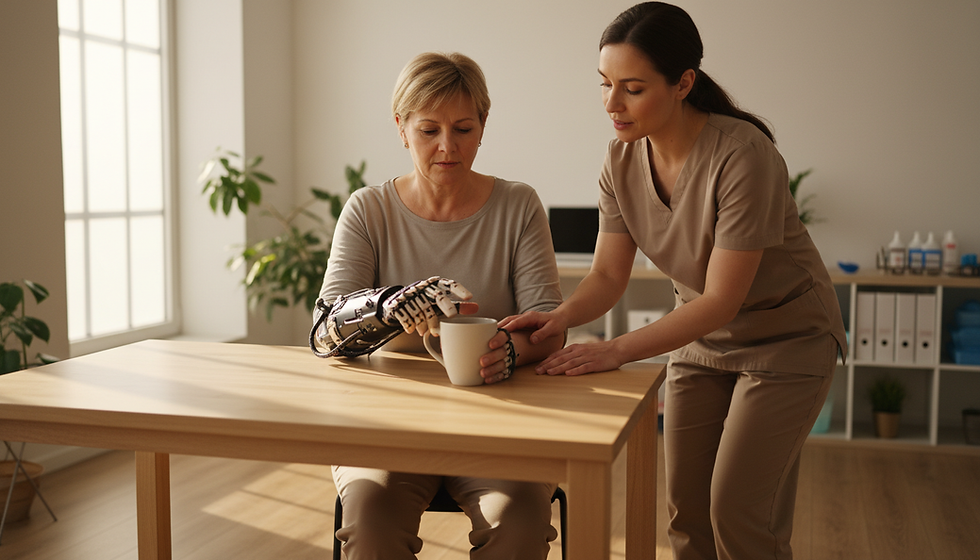
In rehabilitation and mobility support, robots can help patients repeat safe movements under supervision. This matters because recovery often requires repetition. A patient relearning gait, range of motion, or coordinated movement may need consistent practice that is difficult for staff to provide manually for long periods.
Robotic rehabilitation devices may support body weight, guide limb movement, or measure performance. The data can help therapists and nurses understand progress. The machine may provide steady support while clinicians focus on safety, fatigue, pain, and motivation.
The human side still matters. A patient may be afraid to stand after a fall. Another may push too hard. Someone else may need encouragement, rest, or a change in plan. Robots can guide movement, but clinicians guide the person.
Clinical support robots can reduce strain on nurses and nursing assistants
Nursing is physically demanding. Repositioning patients, preventing falls, transporting equipment, and managing constant interruptions all take a toll. Robots can reduce some of that load, especially when they target tasks that are repetitive or hard on the body.
Lifting and transfer support can help protect staff and patients
Manual lifting remains one of the most difficult parts of bedside care. Even skilled teams can face risk when a patient is heavy, weak, confused, in pain, or connected to lines and tubes.
Robotic or powered lift systems can help with transfers, turning, and repositioning. Some systems are fully mobile, while others integrate with beds or ceiling tracks. The goal is not only to prevent staff injury. It is also to move patients in a controlled way that protects skin, lines, dignity, and comfort.
For these tools to work, the unit needs more than equipment in a storage room. Staff need training. Devices need to be easy to access. Leaders need to set the expectation that using lift support is part of safe care, not a sign that staff cannot manage.
A robot or lift device that takes too long to find will not be used. A device parked nearby, charged, and familiar becomes part of the routine.
Robots can lower interruption overload
Nurses make many decisions while fielding constant interruptions. A call light rings. A pump alarms. A family member asks a question. A provider calls. A medication is due. A patient needs toileting. The cognitive load is real.
Robots can help when they remove low-value interruptions. For example, a delivery robot can bring commonly needed supplies to the unit rather than pulling a staff member away. A monitoring device can route certain alerts to the right team member instead of adding noise to everyone. A telepresence system can reduce delays in brief consults.
Still, poor design can make interruptions worse. If a robot frequently gets stuck, sends too many alerts, or needs constant troubleshooting, it adds work. A useful system should save effort over the whole shift, not just look good during a demo.
Documentation support is growing, but it needs careful guardrails
Some robotic and sensor-based systems connect to documentation tools. They may record movement data, vital sign trends, medication delivery events, or environmental checks. This can reduce manual entry and create a clearer picture of patient activity.
Yet documentation is not just data collection. Nursing notes reflect assessment, clinical reasoning, patient response, and care planning. Automated data should support that record, not crowd it with unhelpful noise.
Good guardrails include:
Clear rules for what flows into the health record
Visible source labels for machine-generated data
Easy correction when a reading is wrong
Privacy protections for video, audio, and sensor data
Nurse involvement when deciding which data is useful
The test is simple. If the information helps answer a clinical question, it may belong in the workflow. If it only adds more screens to check, it needs rethinking.

The best results come from careful implementation, not just new machines
Hospitals and care facilities do not improve nursing work by placing robots on a unit and hoping people adapt. Implementation decides whether robotics becomes useful or frustrating.
A good rollout starts with workflow, not hardware.
Start with the nursing problem that needs relief
The strongest use cases begin with a clear statement of the problem. For example:
“Night nurses spend too much time searching for supplies.”
“Patients who need two-person transfers wait too long during peak hours.”
“Specimens are delayed when transport staff are stretched thin.”
“Remote specialists are hard to reach quickly on weekends.”
“Rehab sessions lose time setting up safe supported movement.”
These statements are better than “We need robotics.” They point to a measurable change. They also help teams choose the right tool.
Bring bedside staff into the design
Nurses, nursing assistants, therapists, environmental services staff, pharmacists, and transport teams understand the real workarounds. They know which hallway gets blocked. They know where supplies run out. They know which device alarms too often. They know which patient safety risks do not show up in a vendor slide deck.
Early staff feedback can uncover practical questions:
Where will the robot charge?
Who loads and unloads it?
What happens during a code, fire alarm, or evacuation?
Can it enter isolation rooms?
How does it handle locked medication areas?
Who cleans it, and how often?
What is the backup plan when it fails?
Robotics in healthcare succeeds when it respects the unit’s reality. That includes the messy parts.
Train for routine use and rare problems
Training should cover more than button-pushing. Staff need to know when to use the robot, when not to use it, and what to do if something goes wrong.
For a lifting robot, training should include patient selection, sling fit, line safety, skin protection, and communication during movement. For a delivery robot, training should include secure loading, infection-control cleaning, delivery confirmation, and downtime steps. For telepresence, training should include privacy, consent policies, camera positioning, and what belongs in a remote consult.
Rare events matter too. A robot blocking a hallway, losing power, entering the wrong area, or sending a false alert can create safety concerns. Staff should not have to invent a plan in the moment.
Measure what matters
A robot may be impressive and still fail to improve care. Evaluation should focus on outcomes that matter to patients and staff.
Useful measures may include:
Time from supply request to delivery
Missed or delayed therapy sessions
Staff injury reports related to transfers
Patient wait times for assistance
Room turnover timing where robotic disinfection is used
Staff satisfaction with workload and interruptions
Device downtime and support requests
Patient complaints related to privacy or comfort
Numbers do not tell the whole story. Staff comments matter too. A robot that saves five minutes but causes stress may not be worth it. A robot that saves moderate time and reduces physical strain may be highly valuable.
Safety, privacy, and trust must shape every robotics decision
Robots in nursing operate around vulnerable people. Patients may be sick, confused, frightened, in pain, lightly clothed, or unable to give clear feedback. That raises the standard for safety and ethics.
Patient safety comes first
Every robot should have limits. It should move at safe speeds, detect obstacles, stop when needed, and avoid creating trip hazards. Devices used near patients should meet relevant safety requirements and receive routine maintenance.
For robots involved in lifting, mobility, or rehabilitation, patient selection is essential. Not every patient is a good candidate. A person with severe pain, unstable vital signs, agitation, invasive lines, or changing neurologic status may need a different approach. Clinical judgment should guide use every time.
Robots should also have clear downtime plans. If the robot is unavailable, care still needs to happen. Safe care cannot depend on one machine working perfectly.
Privacy must be built in
Some robots collect video, audio, location data, vital signs, movement patterns, or interaction logs. That can be useful, but it can also feel intrusive.
Patients should understand when a robot is present, what it does, and whether it records anything. Policies should address consent, data storage, access, retention, and security. Staff privacy matters too, since robots may move through work areas and record operational data.
A helpful rule is to collect the least data needed for the care purpose. More data is not always better. Sometimes it is just more risk.
Trust grows through clear communication
Patients may respond to robots in different ways. Some are curious. Some feel reassured by fast service. Others may feel uneasy, ignored, or confused. Older adults, children, patients with dementia, and patients with sensory impairments may need extra care in how the technology appears and speaks.
Nurses often become the bridge between the patient and the device. A simple explanation can make a major difference:
“This robot brings supplies to the unit, so I can stay closer to patients.”
“This device helps us move you safely. I will stay with you the whole time.”
“This screen lets the specialist talk with us, but I am still here at the bedside.”
Clear language protects trust. It reminds patients that technology supports care rather than taking the place of it.

What the future of robotics in nursing is likely to look like
The future will probably not be a hospital full of humanoid robots acting like nurses. That makes for dramatic fiction, but it does not match the real needs of clinical care.
The more likely future is quieter and more useful. Robots will handle more transport, lifting support, remote connection, room disinfection, inventory movement, and guided rehabilitation. Some will blend into beds, carts, pumps, bathing systems, and monitoring tools. Patients may not always think of them as robots.
Artificial intelligence may improve navigation, scheduling, alert sorting, and pattern recognition. That could help robots adapt to busy units and changing patient needs. It could also create new risks if teams trust automated suggestions without checking them. AI-supported robotics needs transparency, testing, and clear boundaries.
Nurses should have a strong voice in this future. They understand patient behavior, safety risks, family dynamics, and the difference between a task that looks simple and a task that is simple. Their feedback can prevent expensive mistakes.
The most useful questions will stay practical:
Does this reduce preventable harm?
Does it give nurses more time for assessment, teaching, comfort, and judgment?
Does it reduce physical strain?
Does it fit the unit without creating new delays?
Does it protect privacy and dignity?
Does it work for patients who are confused, anxious, or hard of hearing?
Does the team know what to do when it fails?
If the answer is yes, robotics can earn its place in nursing care. The promise of robotics is not a nurse-free hospital. The promise is a care environment where nurses have better tools, patients receive more timely support, and routine work no longer consumes so much human energy. Machines can carry, lift, clean, connect, and measure. Nurses still assess, comfort, teach, advocate, and notice the details that change a patient’s course. That balance is where robotics can do its best work.



Comments